
|
|
Harry Fjellström – Model Engineering Maestro by Adrian Duncan with Lars Gustafsson
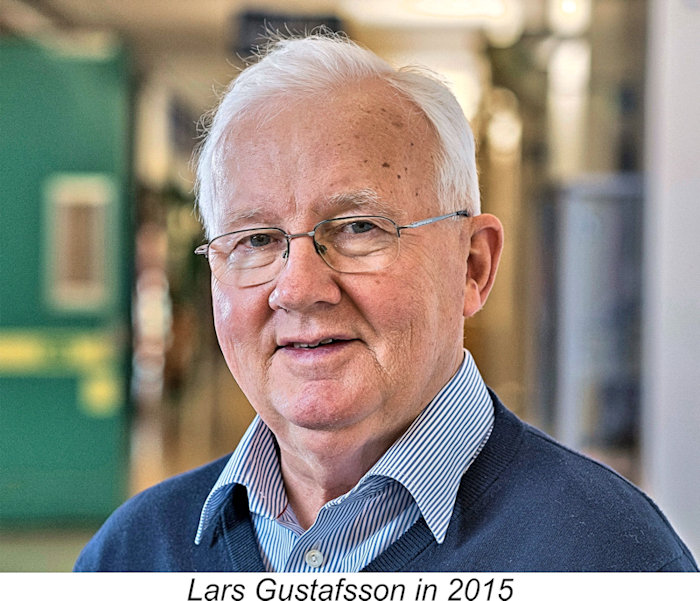
This account of Harry Fjellström’s work was made possible solely through the generous and wholehearted cooperation of my valued Swedish friend and colleague Lars Gustafsson, who carried out all of the first-hand research on this project and developed the entire data-base upon which this article is founded. It would be impossible to thank Lars sufficiently for his efforts in this regard, but I'll do my best - cheers, mate, and here's to you!! The original article which resulted from Lars’s efforts appeared in January 2011 on the late Ron Chernich’s “Model Engine News” (MEN) website, where it may still be found. I’m re-publishing it here to ensure its preservation as Ron’s inaccessible and now-frozen website slowly deteriorates due to an enforced lack of maintenance.
Ivan's plans were based upon an examination of a Swiss Dyno engine which had somehow made its way to Sweden across war-torn Europe by early 1943 to come into the hands of Gunnar Fahlnäs, the chief editor of “Teknik för Alla” magazine. Fahlnäs asked Ivan, who was already a well-known model engineer, to make drawings using his Dyno engine as a pattern. Ivan duly produced such plans, the accuracy or which was confirmed through the construction of several prototype engines. The resulting drawings and building instructions were published in two parts in December 1943 and January 1944 issues of the Swedish technical magazine "Teknik för Alla". They were enormously influential in paving the way towards the further development of the model diesel engine in Sweden, laying the foundations for the early Komet designs among many others.
Further research led Lars to the discovery that following Fjellström's death in 1996 his widow had donated all of his surviving creations and papers to the Tekniska Museet (Technical Museum) in Stockholm. This material remained available for inspection by seriously-interested parties, and Lars was quick to take full advantage of this opportunity. It turned out that a highly representative sample of Fjellström's work was held by the museum, along with an astonishing range of documents associated with his activities. Lars took copious notes and obtained images of the entire collection, making it possible to piece together the following summary of the life and work of a remarkable individual who deserves to be well remembered by anyone interested in model engineering. All of the images which illustrate this article were supplied by Lars Gustafsson. It will be noticed that a few of the archival illustrations do not come up to the usual standard for articles on this site. I make no apology for this and wish to emphasize that the quality of these images is in no sense a reflection upon Lars's photographic abilities - it's simply that they are photographic renderings of faded 70-year-old newspaper illustrations and other documents, making a certain lack of clarity inevitable. Since the original negatives are no longer available, these fading images provide us with the only means of putting a face to the name of Harry Fjellström. I hope you'll agree that their inclusion is far better than nothing at all! Anyway, without further preamble we present the life and work of Harry Fjellström, a remarkably gifted individual whose surviving work stands today as a lasting testament to his talents. I hope you enjoy reading it as much as we enjoyed tracking the information down! Early Years
The main product line of the Citograph company was a range of automatic address printing machines which printed addresses using deep-relief pressed sheet metal plates. Their machines were used by the National Tax Board of Sweden, among others. Harry was married to his wife Elly on July 17, 1943. As of 1944 he was living with his wife at Timmermansgatan 38 in Stockholm. It was in that same year of 1944 that he established a workshop in the attic of his Stockholm residence and began to make model engines. Sweden was not a participant in WW2, making such activities possible. Harry Fjellström’s First Engines
So far, so good - Harry was on his way! But he quickly became intrigued by a question that was occupying the minds of many model engine designers at the time - how small could a model diesel engine be successfully constructed? Harry set out to seek an answer to this question. However, he very wisely did so in stages rather than going for the prize at one fell swoop.
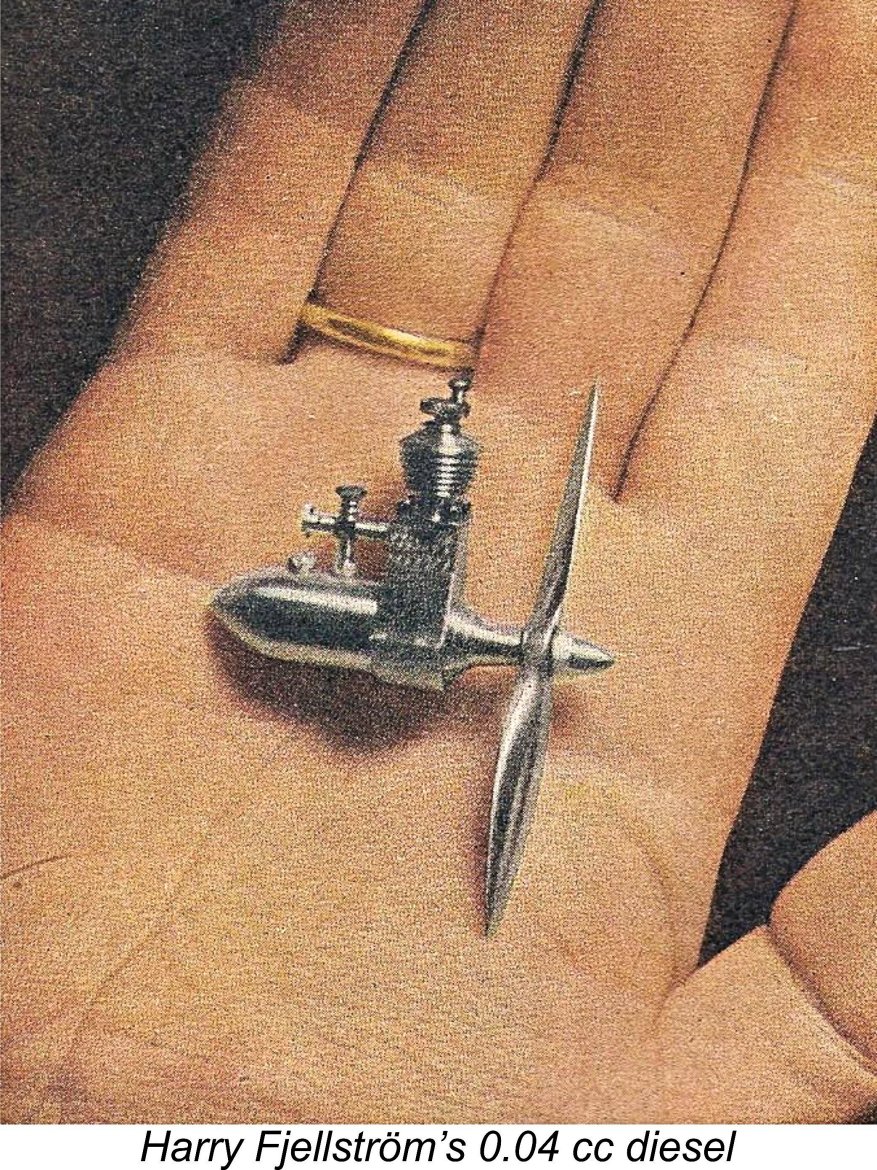
This engine was featured in issue no. 3 of the magazine "Flyg", also appearing in the May 1946 issue of "Populär Teknik". It was referred to in these publications as Sweden's smallest model diesel. Both magazines also featured images of another of Harry's engines, this one reportedly having a displacement of some 3.0 cc. It's clear that Harry had been busy in his workshop! But there was much more to come, or should I say, much less? Harry was sufficiently encouraged by the success of his little 0.254 cc diesel to undertake further investigations into the This engine too apparently worked just fine, encouraging Harry to take what was to prove to be his final step towards the sub-miniaturization of the model diesel. The resulting engine was completed during the latter part of 1946, and must surely stand as one of the most remarkable model engineering productions of the early post-war period. As before, it was based very closely on the original Ivan Rogstadius drawings, although it incorporated a few modifications of Harry's own devising. However, the truly remarkable thing about it was its tiny size. The bore and stroke were 3.15 mm and 5.2 mm respectively for a displacement of only 0.040 cc (0.00244 cuin.)! The engine weighed a mere 9.5 gm ready to run, and turned its hand-made aluminium alloy airscrew at over 5,000 rpm.
As a result of all this publicity, Harry's efforts did not by any means go unnoticed in his native Sweden. He was fortunate enough to be living in an enlightened country in which the creative work of talented individuals such as himself was highly valued for its own sake. In November 1946, he received an award from the hand of the Minister of Education for his remarkable engines. I can only agree that this award was very well deserved!
Harry's activities continued to be followed by the Swedish media - in fact, he might well be considered to have been one of the world's first (and only?) model engineering superstars! In an interview in the October 7th, 1947 issue of the newspaper "Stockolmstidningen", Harry stated that he had By this time, Harry had become deeply involved in the then-popular hobby of model I/C car racing, going so far as to become member number 1088 of the Oakland, California-based International Model Race Car Association. Recalling the success of his earlier 0.254 cc diesel, he built a beautiful miniature tethered racer for an engine of this displacement. This little 282 gm masterpiece survives today at the museum in Stockholm. Harry noted in an interview that it had taken a combined total of 400 hours to complete! He went on to build several other model cars using somewhat larger diesel powerplants of his own making, including one of no less than 9.5 cc displacement. There is no evidence that he ever took up aeromodelling. Harry Fjellström at the Model Engineer Exhibitions All of the attention that Harry received in his native Sweden eventually encouraged him to try his luck upon the international exhibition stage. He had visited the prestigious Model Engineer Exhibition in London in 1947, serving as a steward at that event - his official pass and steward's button survive today among his effects (Harry kept everything!). Having had an opportunity to size up the competition, Harry decided that he would enter the Exhibition himself in 1948.
Needless to say, Harry's work passed this test with flying colors, and he duly exhibited at the Exhibition in London, also serving as a judge for categories in which he was not entered. His official entries were listed in the official catalogue as "two working diesel engines and a miniature racing car", but the official display labels which survive among Harry's papers today tell a slightly different story. These cards state that the actual items exhibited were as follows:
Harry received a letter of thanks from the Exhibition Manager E. D. Stogdon after the conclusion of the event. This letter survives today among his papers.
In his test of the E.D. Bee Mk. I which appeared in the October 1949 issue of “Aeromodeller”, Exhibition attendee Lawrence H. Sparey included the statement that "a diesel of only 0.08 cc has been successfully run", a comment which must surely relate to one of the Fjellström engines. It appears that Sparey somehow missed seeing the 0.04 cc model in operation, or perhaps he did see it running but became confused regarding its displacement. Or perhaps he forgot to wear his glasses or bring his magnifying glass that day! Language difficulties may also have played a part here, although the fact that Stogdon felt comfortable writing to Harry in English suggests that Harry was reasonably conversant with that language. Further Involvement with Model Car Racing
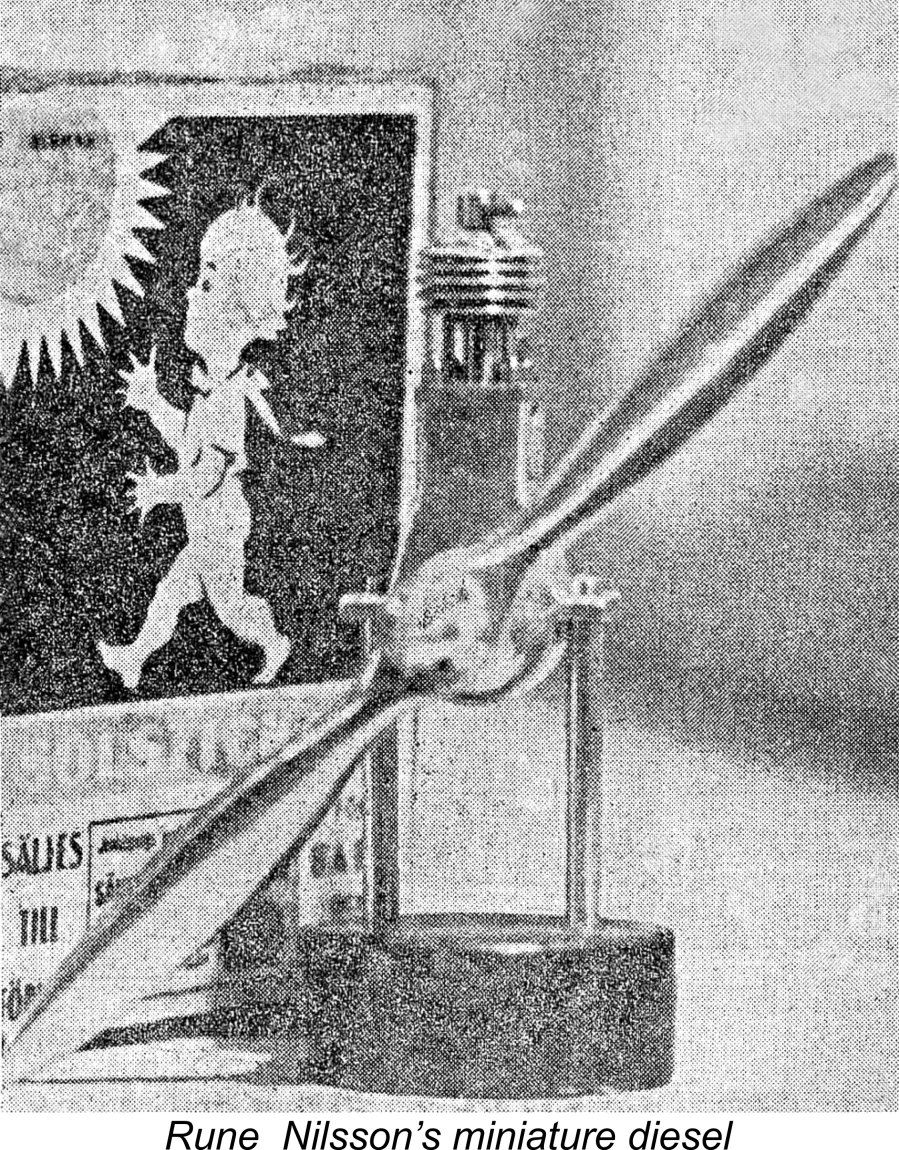
In the same newspaper there was a photograph of another miniature diesel built by Rune Nilsson of Björnlunda, a village lying to the south-west of Stockholm. It seems that Harry had inspired others to follow in his footsteps! The displacement of this engine was not stated, but the size of the Stolstickan match box in front of which the engine is posed in this image confirms its tiny size. Rune Nilsson died some years ago, but Lars Gustafsson made contact with some of his Harry made at least one new engine in 1949 - it survives today at the Tekniska Museet in Stockholm and is clearly dated. Harry was an advocate of hand-held mountings - this one is mounted on a wooden handle-mount! Harry also carried on in the model car racing field, building a number of superbly-crafted trans-axle units. Several of these survive today as lasting testaments to Harry's skill. Harry appears to have entered his final model race car contest in Västerås in March 1950. This event was reported in a March 20th, 1950 newspaper article. But at that point, the record dries up, making it appear that Harry moved on to other interests soon thereafter. Since he was scrupulous in retaining records of all of his modelling activities, we would certainly find evidence in the Harry Fjellström collection today if there had been any further such activities. Postscript Harry Fjellström lived for another 46 years, passing away in Stockholm on March 11th, 1996 during his 86th year. We are indeed fortunate that he took such good care of his models and papers and that his family ensured the preservation of this material though their generous donation to the Tekniska Museet at Stockholm.
Ivan had heard that Lars had succeeded in tracking down the tiny version of his original design that he had recalled so clearly, and was very keen indeed to see it for himself. The visit was a great success and brought back many memories of Ivan's own activities as a pioneer of model diesel engine development in Sweden. Ivan was most impressed with the work of his fellow Swede, as indeed we all must be. The Harry Fjellström collection is available by appointment for hands-on examination at the Tekniska Museet by any seriously-interested party. Any model engineering aficionado visiting Sweden could scarcely find a better way of spending some enjoyable hours in Stockholm! Harry Fjellström was clearly a master craftsman among masters. He richly deserves to hold an honored place in the history of the development of the sub-miniature diesel engine. ____________________ Article © Adrian C. Duncan, Coquitlam, British Columbia, Canada First published on MEN January 2011 This edition published here July 2026 |
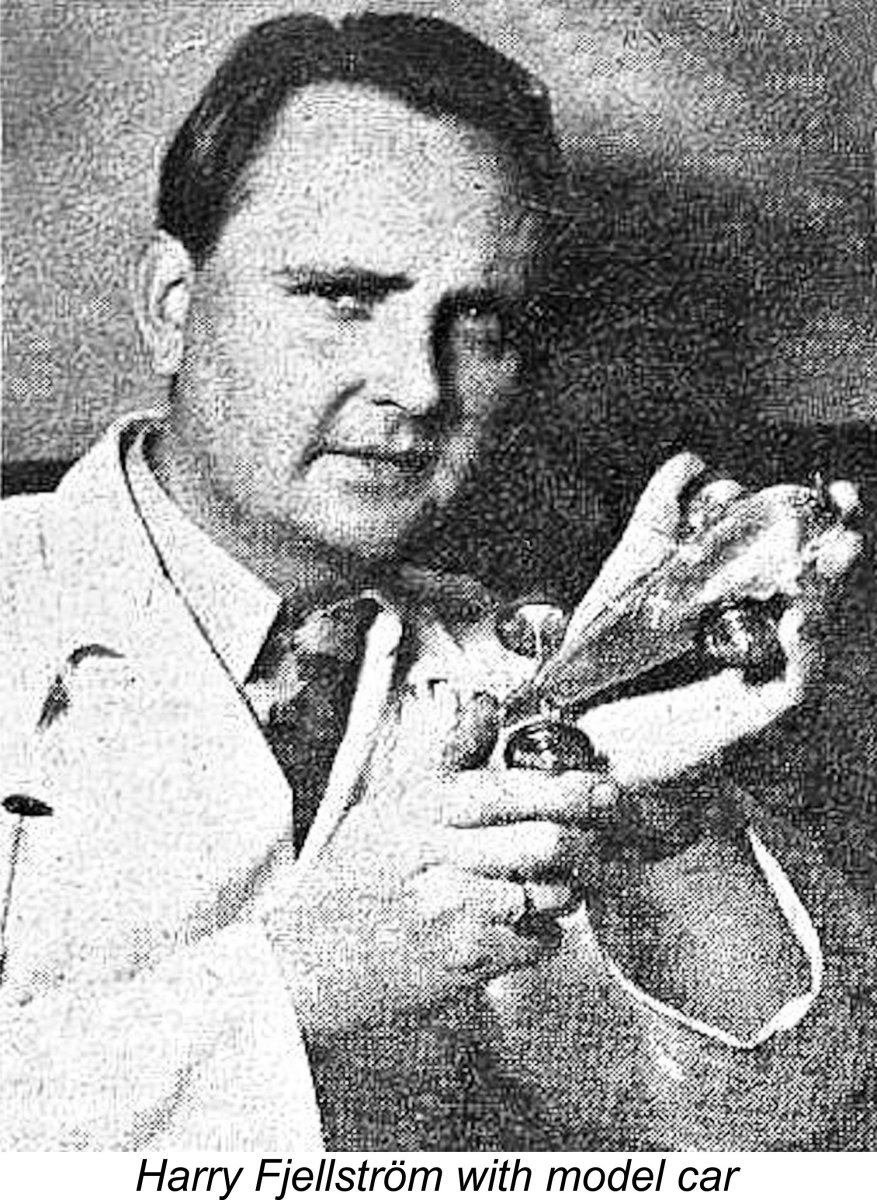 The following article is a tribute to one of the least-known yet most talented of the many individuals who contributed to the development of the model diesel engine during the pioneering era for that form of model powerplant. I’m speaking of Swedish native Harry Fjellström, whose truly outstanding work during the early post-WW2 period has hitherto gone pretty much un-documented in the English-speaking world due to a combination of time and place added to the language barriers involved. Time to redress that situation!
 Harry Fjellström's name first came to my attention during the course of an earlier study relating to the work of Swedish model diesel pioneer
  During his interviews with Lars Gustafsson about his recollections of the pioneering era, Ivan recalled seeing a very tiny model diesel which appeared to be broadly based on Ivan's plan but had a bore of only some 4 mm. This sent Lars off on a search for the engine in question, and he found it (or one like it) featured as the cover photograph in the December 1946 issue of the "other" Swedish technical magazine "Populär Teknik". The article inside supplied the name of the maker, Harry Fjellström.
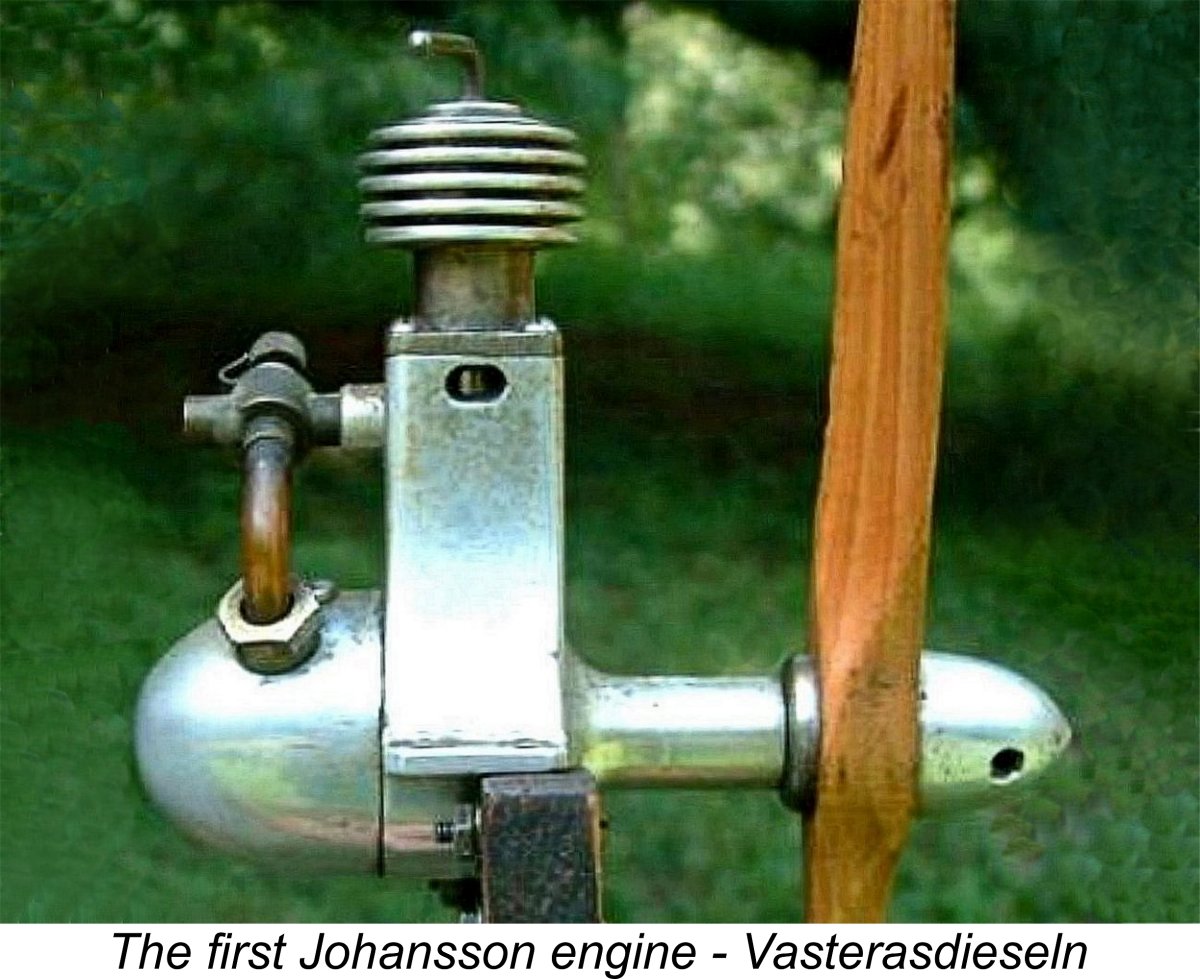 Harry Fjellström was born on September 21st, 1910 in Västerås, Sweden, which is located some distance to the west of Stockholm. Västerås is a highly significant community in the context of Swedish model engine history, since it was here that arguably the best-known and most successful model engine range to emerge from Sweden, the Komet line, was produced by the Johansson brothers from 1944 to around 1959. A detailed review of the Komet series will appear on this website in due course.
 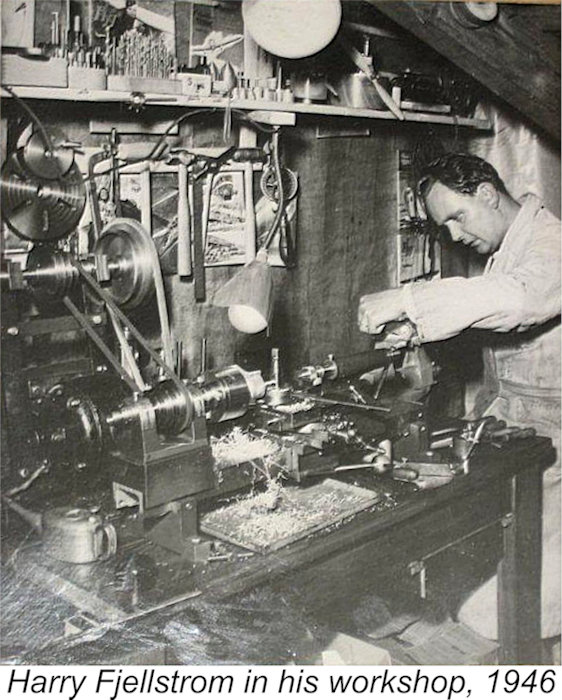 Harry was by profession an instrument maker. It's probable that he worked for a company named Citograph, since an article about this company appears in the September 1944 issue of "Teknik för Alla" which forms part of the Harry Fjellström collection held today in the museum in Stockholm. This particular issue of the magazine contains nothing whatsoever about model engines, making it appear almost certain that Harry kept it solely because his employer was featured. By way of confirmation, one of the individuals in the illustrative photographs with this article appears to be Harry himself. The corner of the page is folded to mark an article of interest, a system which Harry routinely employed to mark such items.
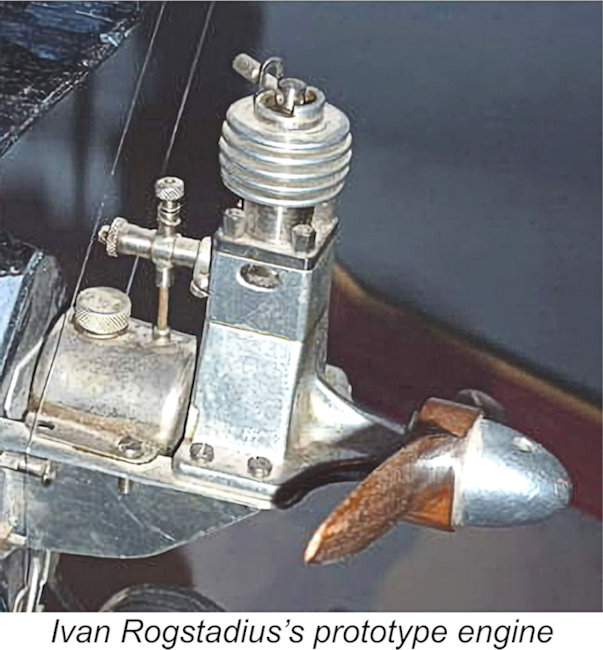 Harry's first known engine was clearly based directly on the drawings published by Ivan Rogstadius, since it looks identical and has the same dimensions. The bore and stroke of 12 mm and 18 mm respectively give an identical displacement of 2.03 cc. This surely cannot be coincidental, and we know that Harry was a reader of "Teknik för Alla". It thus appears almost certain that it was Ivan's published drawing that inspired Harry to embark upon his model engine-making career. Harry's rendition of Ivan's design weighs a healthy 275 gm.
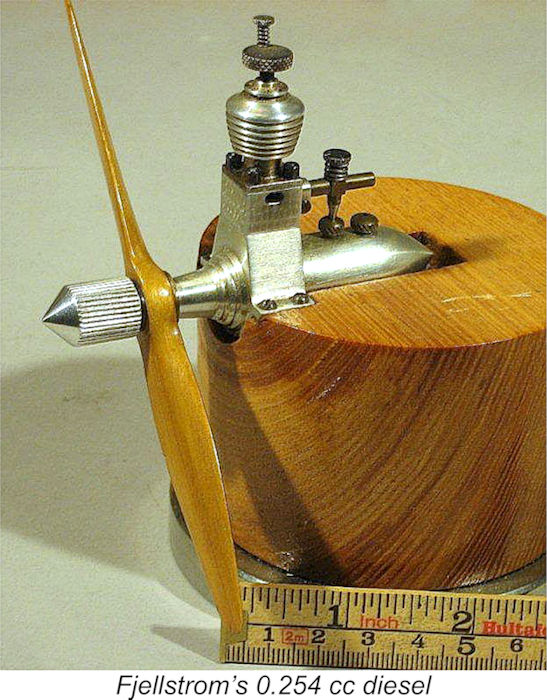 By early 1946, Harry had produced a model of very similar design to his Rogstadius-based original, but having a bore of only 6 mm. The stroke of this engine is unclear, but if we assume that Harry stuck with the established stroke/bore ratio of 1.5:1, the stroke was likely 9 mm and the displacement would have been 0.254 cc. We know from surviving materials in the Harry Fjellström collection in the Tekniska Museet that he did indeed make several engines of this exact displacement.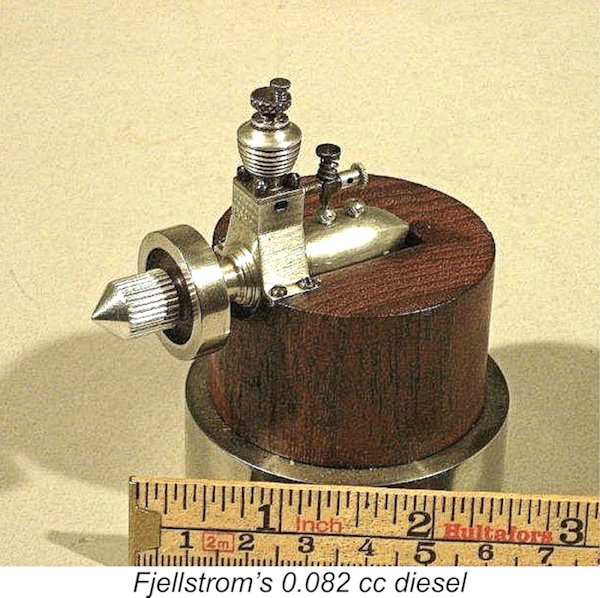
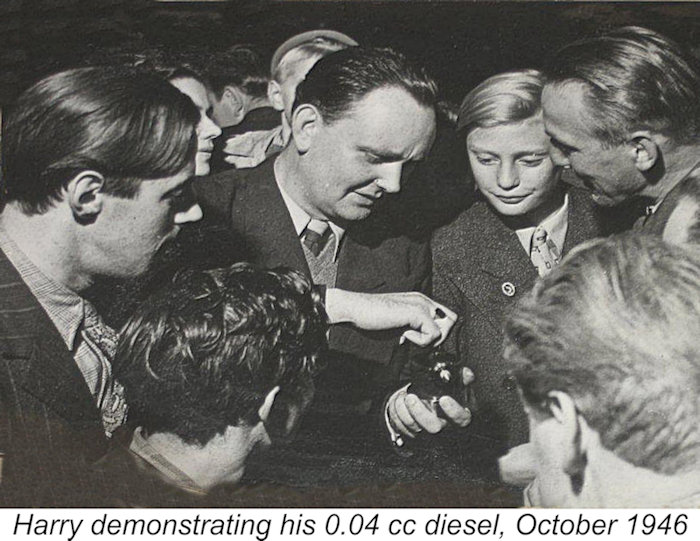 Harry was always happy to demonstrate his little mechanical marvels, and this one caused quite a stir when it first appeared - people could scarcely believe it! The engine even attracted interest from outside the modelling world - the full-scale boating publication "Till Rors" ran a feature on it which included the comment that when first started it sounded like a fly and when fully opened out it sounded like a mosquito! The engine was also featured in the December 1946 issue of "Populär Teknik", as mentioned earlier.
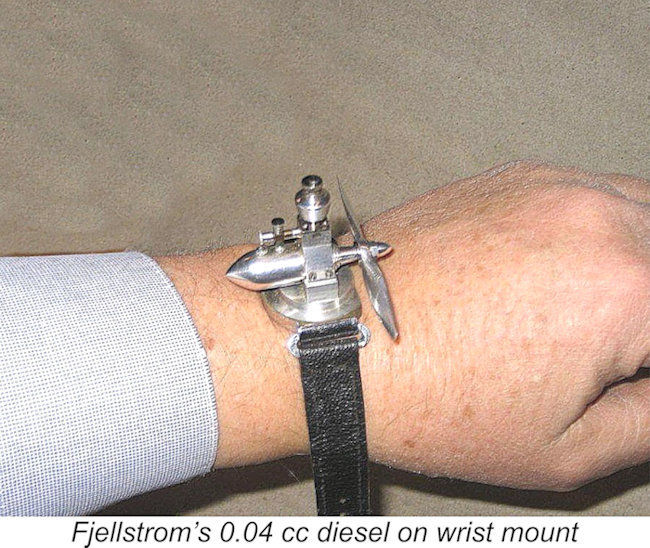 Harry's little engines were always a great attraction at public events at which he appeared. To emphasize the tiny size of his 0.04 cc model, he made a little wrist-watch mounting for it. This survives today in the Fjellström collection in Stockholm. But his remarkable sub-miniature was not just for static display - he was always happy to run it for interested groups or individuals. In fact, the little engine got so much demonstration running that it eventually became necessary for Harry to rebore it. During this procedure, the bore was opened out to 3.3 mm and the displacement consequently rose a little to 0.044 cc. It remains in this state today as the tiny jewel in the crown of the Harry Fjellström collection at the Tekniska Museet in Stockholm.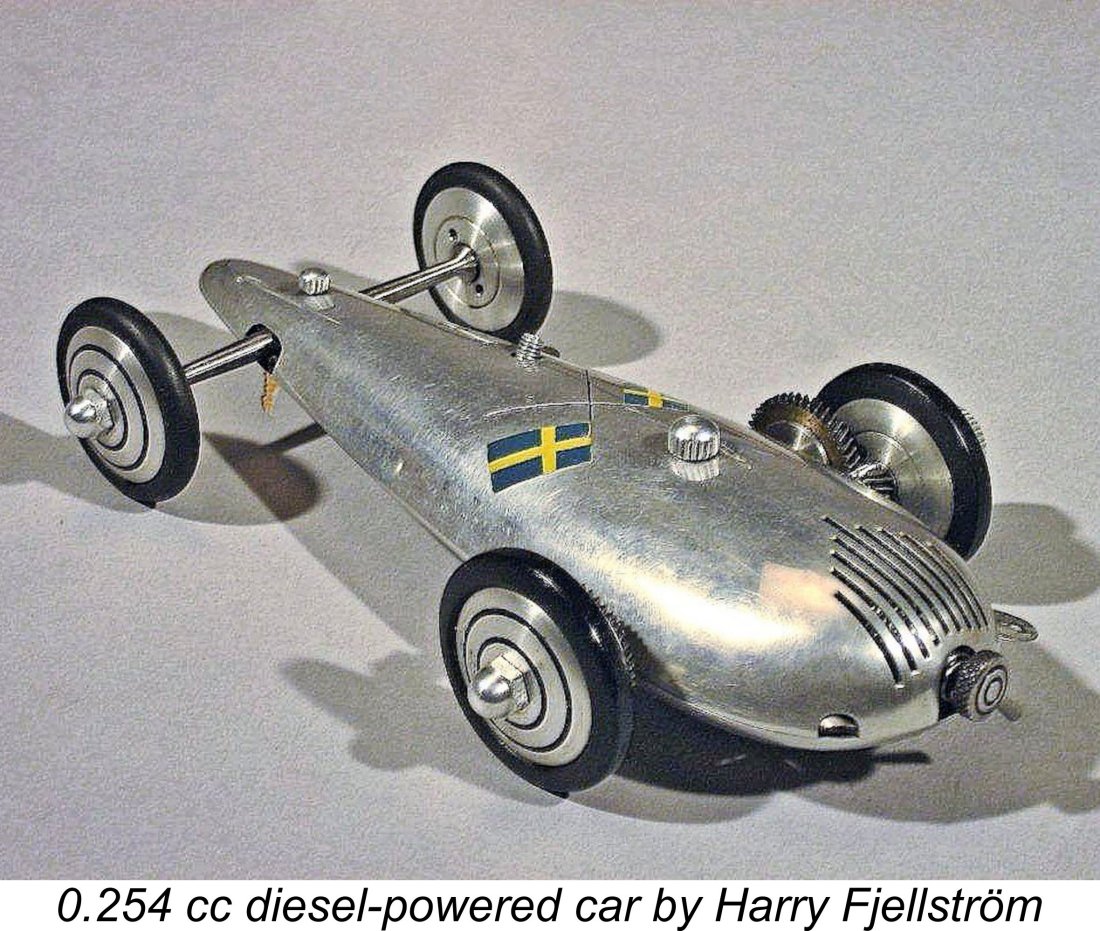
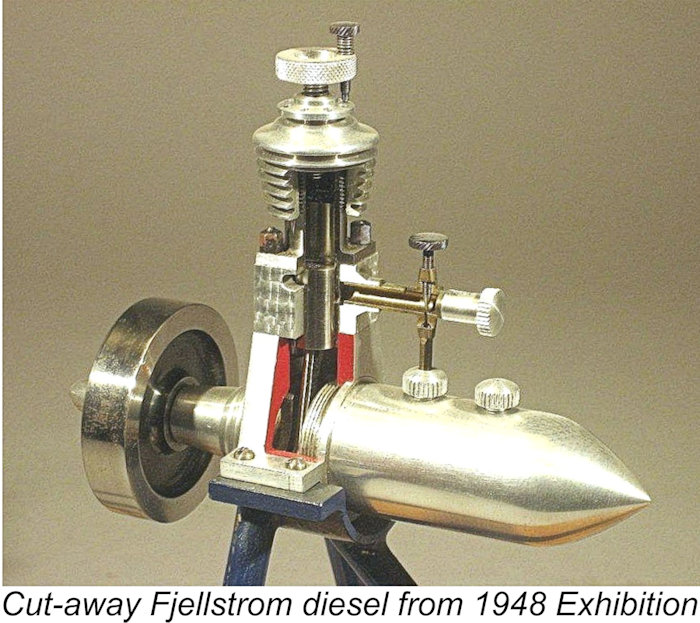 The event was to be held in London during the period of August 12
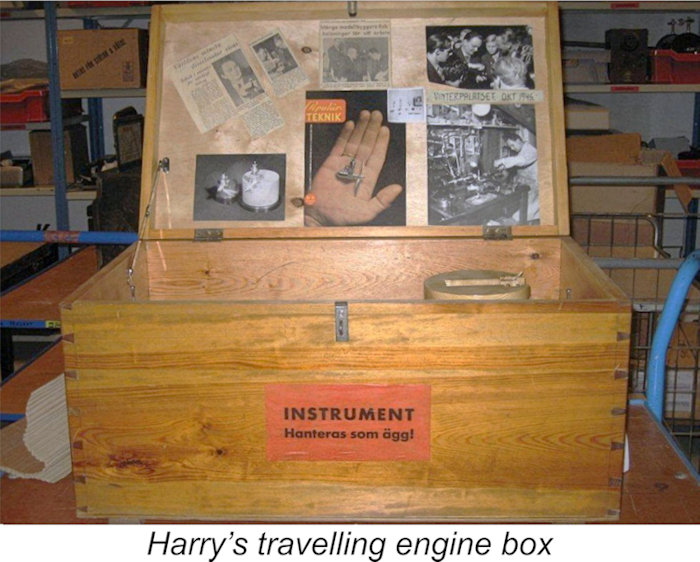 Despite apparently being confined to a maximum of three official entries under his own name, Harry appears to have taken his full collection with him to the event - the special box in which the items all traveled survives today, still labeled for the Exhibition. In particular, he seems to have demonstrated his 0.082 cc model in addition to all the others. This engine had presumably been the other "working diesel engine" which was listed in the program, but had been scratched in favor of the cutaway model.
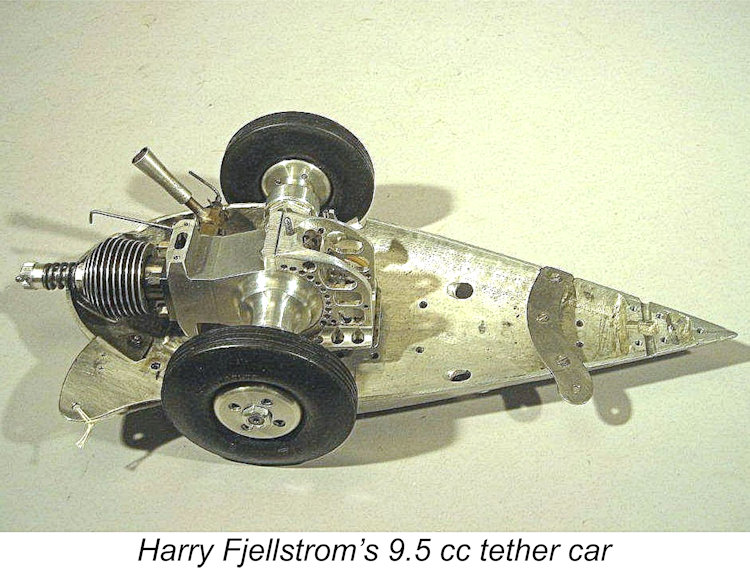 Returning to Sweden, Harry continued his involvement with model car racing. On October 25
 built. It had a attached voltmeter and was powering a light bulb. The writer also recalled Harry's participation in the 1948 London Model Engineer Exhibition.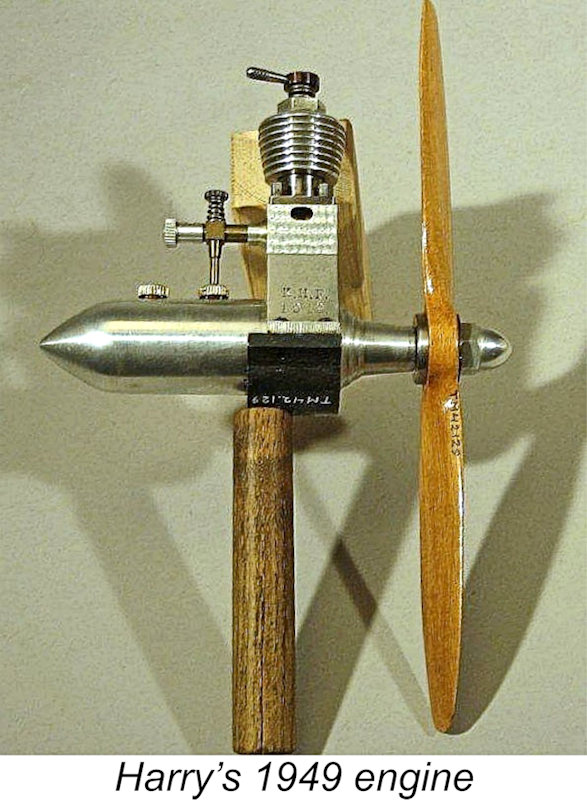
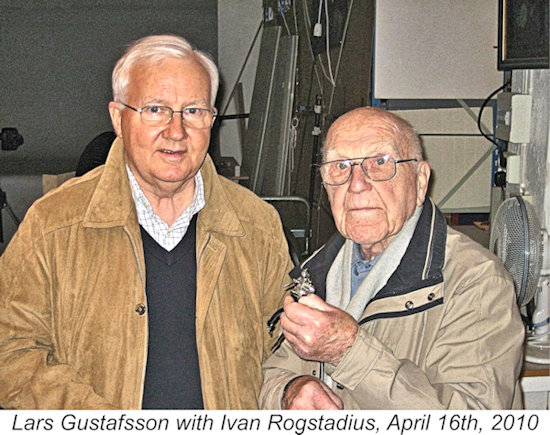 On April 16
| |